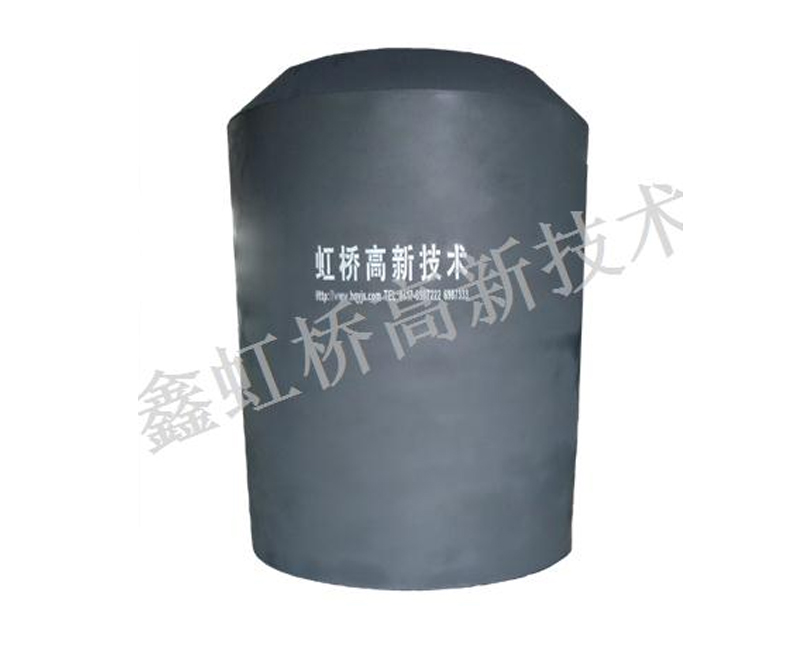
Ladle Fetal Mold (Telescopic)
When pouring, first hoist the fetal mold into the ladle, control accurate centering by the limit device, and adjust the fetal mold in the horizontal and vertical directions with the manual hydraulic device to make the fetal mold be in the middle position of the ladle and ensure uniform pouring wall thickness. Vibration motors are installed in the shell of the fetal mold, and all or part of the vibration motors can be started at the same time as needed during pouring to ensure that the castable is compacted and exhausted. The integral pouring fetal mold of the ladle is fixed on the large base plate by connecting the centering device and the main frame as a whole through slideways; one end connects the shell and the main frame as a whole through the main shaft assembly, and the other end connects the telescopic door as a whole through the electric cylinder to form an elliptical cone with the shell.
● Telescopic function of the fetal mold shell: After the ladle pouring is completed, start the electric cylinder with the fetal mold assembly as the fixed axis. When the upper and lower electric cylinder levers contract synchronously, the telescopic door retracts along the splayed inclined plane, and the telescopic pull rod follows; pull the two shells of the fetal mold to contract, at this time the cone becomes smaller and disengages from the pouring layer to realize automatic demolding. On the contrary, when the upper and lower electric cylinder levers extend synchronously, the electric cylinder pushes the telescopic door to slide along the splayed inclined plane to push the two shells open, at this time the fetal mold restores to the original cone, and the expansion and contraction of the fetal mold shell is realized through such reciprocation.
● Centering of the fetal mold: When the ladle is subjected to integral pouring, the ladle is placed on the ladle pouring table and the fetal mold is put in for centering. If the ladle and the pouring fetal mold are not concentric, the pouring wall will be uneven in thickness after pouring. Therefore, it is necessary to center the centers of the ladle and the pouring fetal mold through the hydraulic system. After starting the hydraulic system and ensuring its normal operation, first adjust the four manual centering hydraulic devices respectively to make the surrounding gaps uniform, level and lock the fetal mold, and then the operator pushes the slideway with the horizontal moving oil cylinder to move the fetal mold to a proper position as required.
● Vibration of the fetal mold: Three layers of vibration motors are evenly arranged in the upper, middle and lower parts of the pouring fetal mold according to the size of the ladle. When pouring the lower layer, the vibration motors vibrate for 2 minutes after each pouring; when pouring the middle layer, the vibration motors vibrate for 2 minutes after each layer of pouring; when pouring the upper layer, the vibration motors vibrate for 2 minutes after each layer of pouring; after the whole pouring is completed, the upper, middle and lower three layers of vibration motors vibrate simultaneously for 2 minutes. The purpose is to tamp the castable and eliminate the residual gas in the castable to ensure the pouring quality.
● Vibration isolation of the fetal mold: The vibration waves generated by the vibration motors are transmitted to the pouring layer through the outer shell of the pouring fetal mold, making the castable generate vibration waves to further realize tamping and exhaust. To prevent the vibration from being transmitted to other media from the bottom of the fetal mold and affecting the tamping and exhaust of the castable, rubber vibration isolation pads are installed at the contact parts between the fetal mold and other components, which effectively solves the transmission of vibration waves.
Previous:Mold
Next:NO MORE